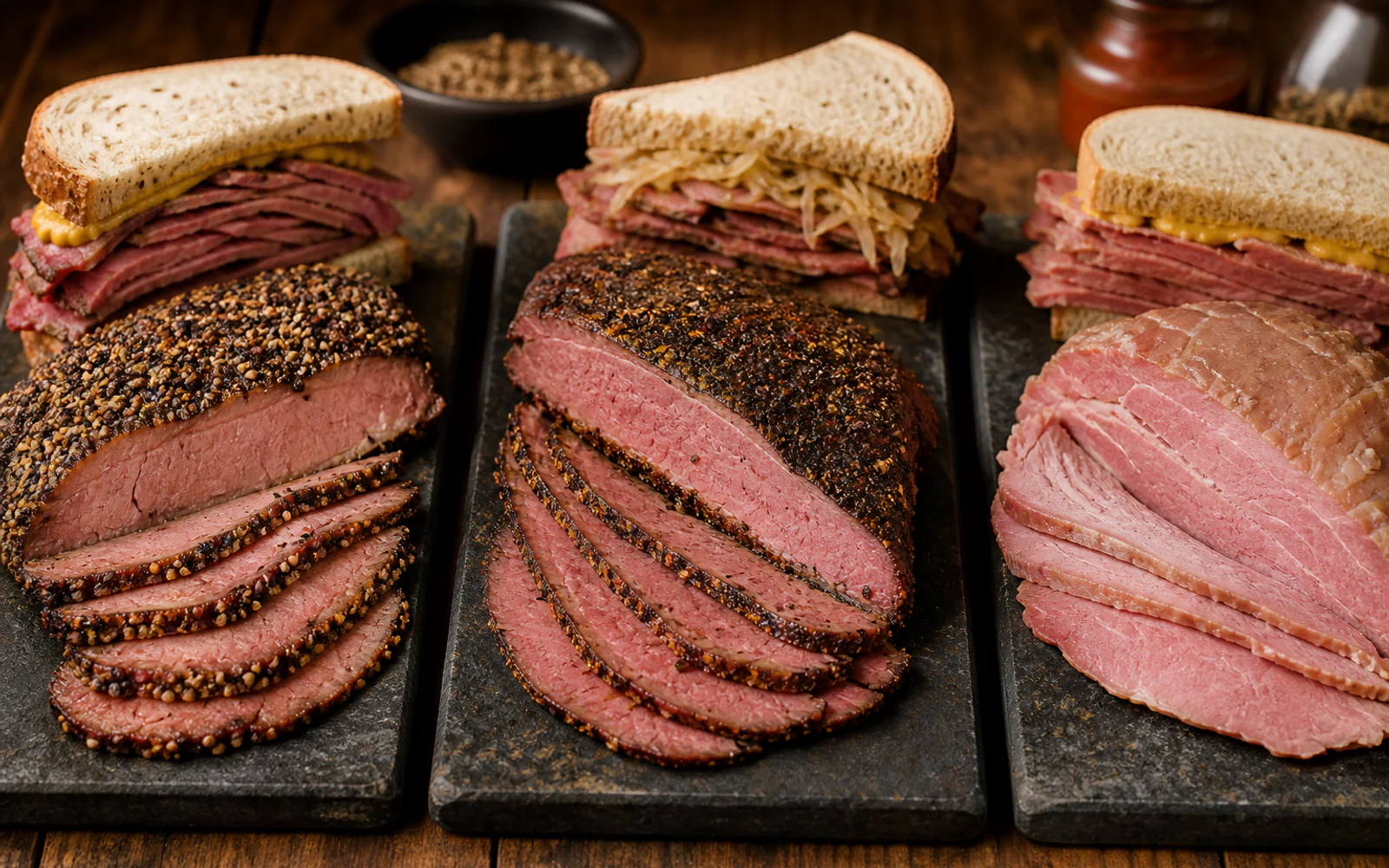
Same ancestry, three different animals. Here is what changed, and why.
| Montreal smoked meat | New York pastrami | Corned beef | |
|---|---|---|---|
| Cut | Whole brisket, flat and point | Navel (beef plate) | Brisket, usually the flat |
| Cure | Dry rub, 10–14 days in barrels | Wet brine | Wet brine |
| Spice | Savoury and aggressive — black pepper, coriander, mustard seed, garlic | Sweeter — sugar, cloves, garlic | Salty, mild pickling spice |
| Heat | Hot smoked, then steamed 2–3 hours | Hot smoked, then steamed or braised | Boiled or simmered in spiced water |
| Crust | Dark peppercorn bark | Bark, sweeter edge | None |
The cut was an accident
New York pastrami is traditionally made from the navel — a fatty, dense, flat cut from the underside of the animal. Montreal butchers could not easily get it, because British butchery conventions dominated the Canadian meat trade and cut the carcass differently.
So they used the whole brisket. It is stringier and more fibrous than navel, but it carries a substantial fat cap that insulates the meat through a hard cure and a long smoke. An entire regional style exists because of what was on the hook.
Dry cure versus wet brine
This is the difference you can taste. Corned beef and most pastrami are wet-brined — submerged in salt solution, which is faster, more uniform, and adds water weight to the finished product.
Montreal smoked meat is dry-cured. Whole briskets are hand-rubbed with coarse curing salt and spice, packed tight into barrels, and left for ten to fourteen days to cure in their own drawn-out juices. It is slower, it yields less, and it concentrates flavour instead of diluting it.
Why steaming is not optional
Long smoking drives moisture out and hardens the exterior. Left there, you would have something closer to jerky than a sandwich. Two to three hours in a steamer finishes the job that heat started: the remaining collagen yields and turns to gelatin, which coats the muscle fibres and makes the whole thing tender.
Which is also why it must be cut by hand. Run a hot steamed brisket through a rotary slicer and the fibres shred into paste. A knife, and someone who can read the grain, is the only way.