Smoked meat arrived as a sandwich and mostly stays one. Worth knowing why the sandwich is built the way it is — and then worth knowing what else a hot, carved brisket can do at an event.
First, the classic — and why every part of it is deliberate
Seedless light rye, yellow mustard, a jumbo kosher dill. It looks like stubbornness. It is closer to engineering.
Rye, because of the crumb. A brioche bun adds butter and egg to meat that is already rich. Sourdough has big air pockets that let the juices run straight out, and a tang that argues with the bark. Rye has a tight, even crumb that soaks up rendered fat and spice without falling apart. Steam the sliced rye briefly and it goes pliable enough to close over a four-inch stack of meat.
Caraway, because of contrast. Deli rye is seeded with caraway, which people often mistake for fennel or anise. It is sharper and cooler than either, with a citrus edge that lifts the heavy pepper of the bark. Caraway has also been used as a digestive aid for centuries — traditionally, alongside rich food, for exactly this kind of meal.
Yellow mustard, because of acid. Not Dijon, not spicy brown. Plain yellow mustard is high in vinegar, and that acid strips fat off the tongue between bites. It is the reason the tenth bite tastes like the first.
The pickle, because of fermentation. A proper deli pickle is not sterilised in vinegar. It is lacto-fermented in water, kosher salt, garlic and dill — vinegar was made from wine and too expensive for the people who invented these pickles. Naturally occurring bacteria turn the cucumber’s sugars into lactic acid, which preserves it and makes it properly sour. Half-sours run one to two weeks and stay bright green and crisp; full-sours go three weeks or more, turn olive, and hit much harder.
Then, eight other things worth doing
Everything below starts from the same carving board, which is the practical point: one brisket, several formats, no extra kitchen.
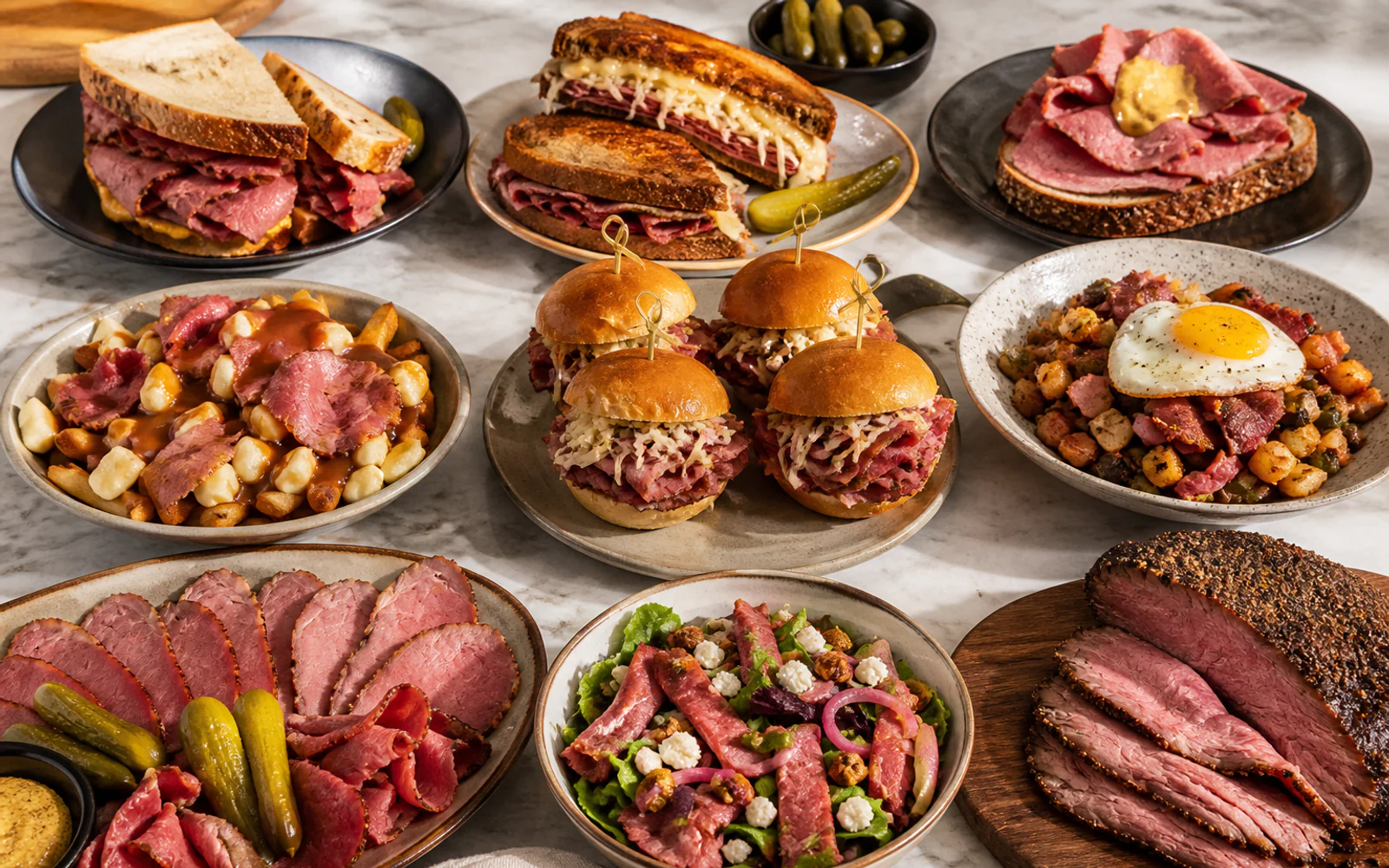
- The Reuben. Same meat, plus Swiss and sauerkraut, grilled until the cheese gives. Heavier and messier than the plain sandwich, and reliably the first tray to empty.
- Open-faced on rye, knife and fork. One slice, meat piled on, mustard on the side. Better for a seated room than a stacked sandwich, and it lets people see the carve.
- Smoked meat poutine. Fresh-cut fries, curds, gravy, carved meat over the top. Quebec and the brisket in one bowl. The most popular thing we do after the sandwich itself.
- Sliders. Small kaiser rolls, two or three bites each. The right call for a cocktail hour where people are standing and holding a drink.
- Smoked meat hash. Diced brisket, potato, onion, crisped hard. This is the brunch and morning-after answer, and it is what the ends of the brisket are for.
- On a platter, with the sides doing the work. Carved meat, Montreal coleslaw, potato salad, chopped liver, rye on the side. Guests build what they want, and dietary needs sort themselves out without a conversation.
- Eggs, any way. Folded through scrambled eggs or laid over a poached egg on rye. Rich, quick, and unexpected at a morning event.
- Straight off the board. Warm, carved, no bread, mustard to dip. Purists insist this is the only honest way to taste the cure and the smoke — and they have a point.
Choosing your carve
However it is served, the fat question comes first. Lean comes from the flat: firmer, drier, and what people ask for when they are being careful. Fatty comes from the point: rich, nearly creamy, and the connoisseur’s order. Medium is carved to balance the two, and it is the local gold standard for a reason.
At an event, Ryan carves to order and asks each guest. It takes three seconds and it is most of the difference between catering and a buffet.