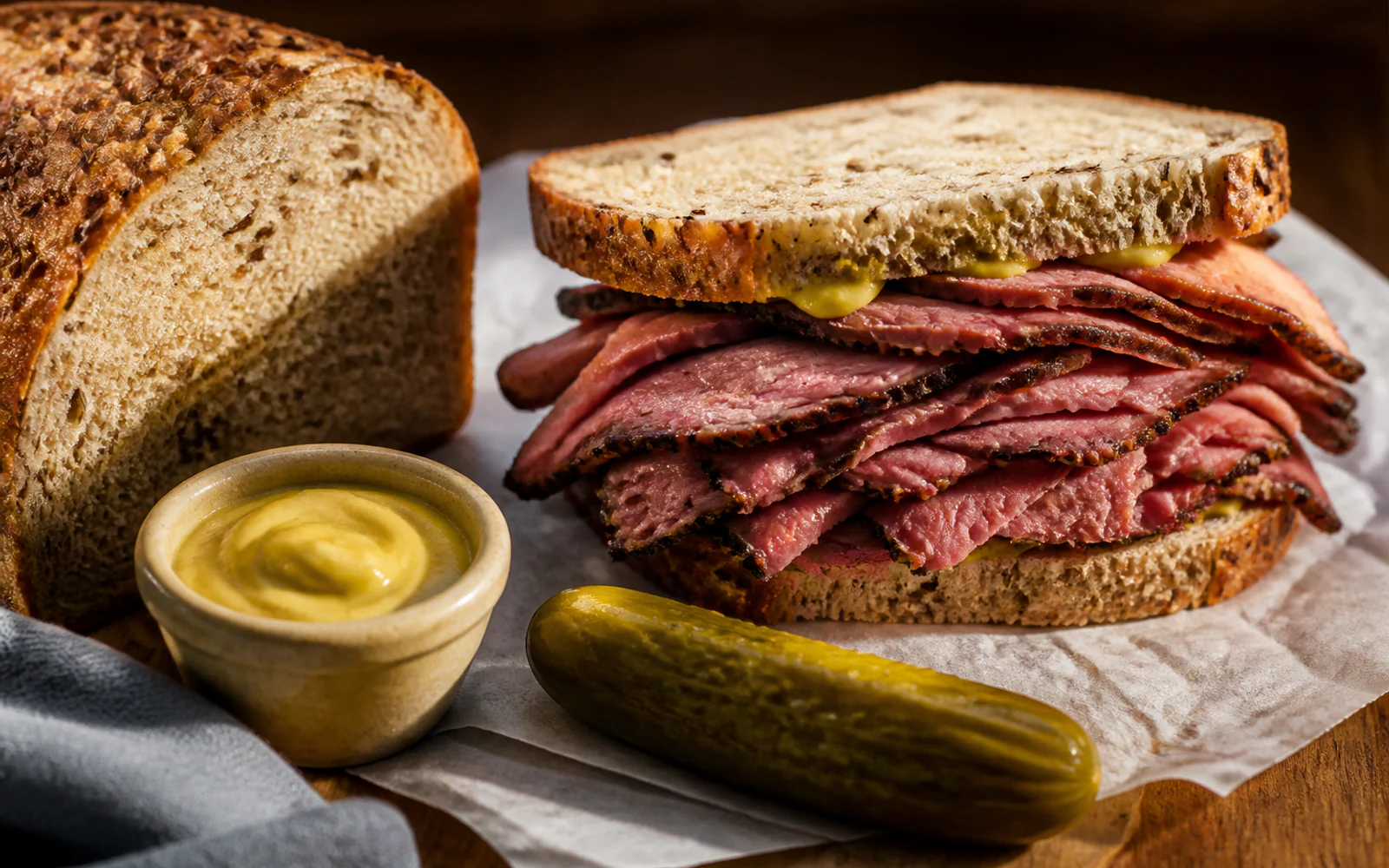
Rye, yellow mustard and a kosher dill are not tradition for tradition’s sake. Each one is doing a job.
The bread is structural
Rye has a tight, uniform crumb. It behaves like a sponge — it absorbs rendered beef fat and the spice washing off the bark without collapsing. A crusty artisan sourdough has large air pockets that let the juice run straight out, and an acidic tang that fights the meat instead of supporting it. A brioche bun adds butter and egg to something that already has plenty of fat.
And rye takes steam well. The last step in building the sandwich is briefly steaming the sliced bread so it turns pliable enough to compress a four-inch stack of meat into something a human can actually bite.
The caraway is medicine
Deli rye is studded with caraway seed, which most people mistake for fennel or anise. It brings a sharp, cooling, faintly citrus note that cuts through the black pepper and fat.
It also does something measurable. Caraway is rich in essential oils — carvone, limonene, anethole. Carvone stimulates the stomach and acts as a carminative, meaning it actively suppresses gas formation and helps you process a heavy, fatty meal. Caraway also contains mild antihistamine and antimicrobial compounds that relax intestinal muscle.
The pairing was dietary wisdom centuries before anybody could explain the chemistry behind it.
The mustard is a palate cleanser
Plain yellow mustard looks like a lack of ambition next to a good Dijon. It is not. Its high acetic acid content chemically strips coating fat off the tongue, which is the only reason the tenth bite of a rich sandwich tastes as vivid as the first.
The pickle is a probiotic
A proper deli dill is lacto-fermented, not vinegar-pickled. Cucumbers go into water, kosher salt, garlic and dill, and naturally occurring Lactobacillus does the rest, converting the cucumber’s sugars into lactic acid.
The reason is economic before it is culinary: vinegar was made from wine, and wine was expensive for the Eastern European Jewish families who developed the recipe. Salt and time were cheap. The result preserved the vegetable through winter, tasted more complex than anything vinegar produces, and happened to be full of live bacteria that are good for you.
- Half-sour — one to two weeks. Bright green, still crunchy, tastes like a cucumber that has had an idea.
- Full-sour — three weeks or more. Olive-drab, deeply acidic, and the correct choice next to fatty brisket.
Four components. Every one of them earning its place. That is why the plate has not changed in a century — not stubbornness, just nothing better having turned up.